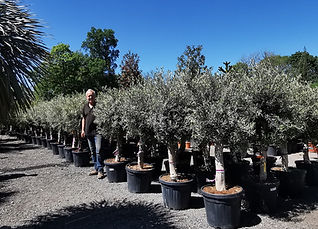
A Guide To Choosing The Right Olive Tree For You
Olive trees come in a remarkable range of forms, and each style brings a different personality, structure, and impact to a garden. Having multiple formats allows customers to choose a tree that suits their space, their taste, and the atmosphere they want to create. From ancient, sculptural specimens to clean, architectural shapes, each type offers something unique. All of our olive trees are hand‑picked and individually tagged by us, ensuring every specimen meets the highest standards of character, structure, and health. Explore our Olive Tree section to discover the full collection and find the perfect style and size for your space. These are just a few of the olive tree formats we offer.
Ancient and Gnarled
These are the most characterful olives, often centuries old, with thick, twisted trunks and natural hollows that tell their own story. They create an instant focal point and bring a sense of age, permanence, and Mediterranean drama to any setting. Their irregular, sculptural forms make them living pieces of art.
Specimen Olive Trees
Specimen olives are standout trees chosen for their exceptional structure, balance, and presence. These are premium, one‑of‑a‑kind pieces selected for their strong form, beautiful canopies, and impressive visual impact. Specimen olives can be ancient, open‑crown, branched, or trained forms,but what defines them is their individuality and quality. They are ideal for customers wanting a statement tree that elevates a space instantly, whether in a courtyard, terrace, or landscaped garden.
Plate-Form and Cloud-Form
These highly trained shapes offer a refined, architectural look. Plate olives have wide, layered canopies that create a bold, horizontal silhouette, while cloud‑pruned olives feature rounded, floating pads of foliage for a soft. Both styles work beautifully in modern gardens, courtyards, and formal entrances.
Smaller olive trees in 45L pots
A great buy because they offer strong structure, established roots, and real Mediterranean character at a very accessible size and price. They’re big enough to make an impact but still light, manageable, and easy to place in patios, courtyards, entrances, balconies, or borders. Their versatility makes them useful for almost any setting—whether planted straight into the ground to grow on or kept in a stylish pot for an instant, elegant feature.
They’re one of the most flexible options in the range, giving customers a premium-looking tree without the scale or cost of a large specimen.
Branched Crown
A branched crown olive has a natural, open canopy with multiple visible stems leading into a rounded top. This is the classic Mediterranean look, soft, airy, and elegant. It suits almost any garden style and offers a balance between natural growth and gentle shaping.
Open Crown
An open‑crown olive has a naturally airy, spreading framework, but the key feature is that most of the branches sit comfortably beneath a broad, relaxed crown of leaves. Instead of forming a tight ball or a clipped topiary shape, the canopy opens outwards and upwards, creating a soft umbrella of foliage that gently covers the branching structure below. This gives the tree a sun‑washed, Mediterranean feel, with dappled light moving through the canopy and a silhouette that looks effortless rather than trained. It’s ideal for customers who want a natural, effortless look without the rugged intensity of ancient olives or the formality of topiary. Open-crown trees work beautifully in borders, patios, and seating areas where dappled shade is desirable, and they require very little maintenance.
Slim Trunk / Tall Standard
These olives have a clean, upright trunk with a neat head of foliage at the top. They’re perfect for tighter spaces, pathways, patios, and doorways where height is needed without taking up too much ground space. Their simplicity makes them incredibly versatile.
Formal Topiary Shapes
From balls and cones to spirals and tiered forms, topiary olives bring structure and precision. They’re ideal for entrances, terraces, and symmetrical designs, adding a sense of order and elegance while still keeping the soft, silvery texture olives are known for.
Pom-Pom Olives
Pom‑pom olives are a playful yet highly refined topiary style, featuring multiple rounded balls of foliage spaced along the trunk or branches. They offer a sculptural, contemporary look that works beautifully in modern gardens, courtyards, and statement planters. Their tiered, rhythmic structure draws the eye upward and adds height without heaviness. Pom‑pom olives are perfect for customers who want something artistic and eye‑catching, and they pair well with clean lines, gravel gardens, and minimalist planting schemes. Maintenance is simple—just light clipping to keep the spheres defined.
Mini Bonsai Olive Trees
Mini bonsai olives are compact, characterful trees trained into miniature forms that showcase the natural beauty of olives on a small scale. Their tiny, sculpted trunks and delicate canopies make them perfect for tabletops, balconies, small patios, and intimate garden corners. They bring all the charm of a mature olive—texture, movement, and Mediterranean personality—but in a size that fits almost anywhere. These are ideal for customers who want something unique, artistic, and easy to place, and they pair beautifully with terracotta bowls, stone planters, or minimalist pots.
Olives in Terracotta Bowls
Olives grown in wide terracotta bowls offer a beautifully relaxed, Mediterranean aesthetic. The shallow, broad container creates a low, spreading silhouette that feels sun‑baked and authentic—perfect for patios, courtyards, and seating areas. Terracotta naturally breathes, keeping the root zone drier and closer to the conditions olives love, while the bowl shape emphasises the tree’s trunk and canopy. This format works especially well with open-crown, branched crown, and smaller gnarled olives, creating a timeless, rustic look with minimal maintenance. It’s ideal for customers who want a softer, more natural presentation than a tall pot or formal topiary planter.
Each format offers its own atmosphere, from wild and ancient to crisp and contemporary.
Matching the Tree to Your Space
Small patios, courtyards, and entrances: Slim trunk, tall standard, pom‑pom, or topiary.
Large gardens and feature areas: Ancient gnarled, plate-form, cloud-form, or open crown.
Modern, minimalist spaces: Cloud-form, plate-form, or pom‑pom.
Traditional or Mediterranean-style gardens: Branched crown or open crown.
Matching the Tree to Your Style
Love character and age: Take a look at Ancient gnarled.
Prefer clean, structured shapes: Take a look at Cloud, plate, pom‑pom, or topiary.
Want a natural Mediterranean feel: Take a look at Branched crown or open crown.
Need height without bulk :Take a look at Slim trunk or tall standard.
Practical Considerations
Wind exposure: Ancient olives are naturally stable; slim trunks may need staking.
Maintenance: Topiary, pom‑pom, and cloud forms need light shaping; open crown and branched crown need very little.
Budget: Ancient olives are a premium; slim standards and branched crowns are more cost-effective.
Purpose: For a centrepiece choose ancient, plate-form, or open crown; for framing entrances choose slim trunk, pom‑pom, or topiary; for relaxed Mediterranean charm choose branched crown or open crown.
Choosing the right olive tree is ultimately about the feeling you want the tree to bring to the space—sculptural, architectural, relaxed, or refined.